
Workforce Planning Oman: A Complete Guide for Businesses
Effective workforce planning is essential for businesses that want to maintain productivity, control recruitment costs, and prepare for future growth. Companies across construction, oil and gas, manufacturing, logistics, hospitality, facility management, and infrastructure need the right number of employees with the right skills.
This is why workforce planning Oman has become an important part of modern HR and recruitment strategies.
A strong workforce plan helps businesses understand current staffing levels, identify skill gaps, forecast future requirements, and prepare recruitment strategies before shortages affect operations.
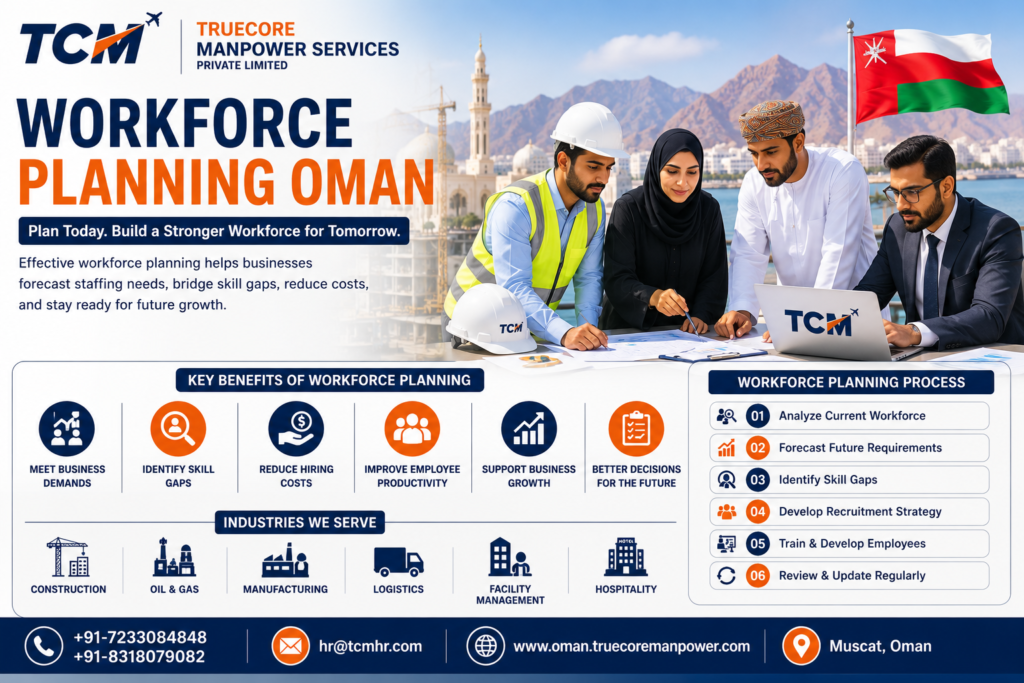
What Is Workforce Planning?
Workforce planning is the process of analyzing current employees and forecasting future workforce requirements.
It helps businesses determine:
- How many workers are required
- Which skills are needed
- Which positions need to be filled
- When new employees will be required
- Where workforce shortages may occur
- Which roles require training or recruitment
Effective workforce planning Oman allows businesses to prepare for changing operational and project requirements.
Why Workforce Planning Is Important in Oman
Businesses in Oman operate in a changing labour market where workforce requirements can vary by industry, project, occupation, and location.
A good workforce strategy can help companies:
- Reduce staffing shortages
- Improve recruitment efficiency
- Prepare for new projects
- Identify skill gaps
- Reduce unnecessary hiring
- Improve employee productivity
- Support long-term business growth
Oman’s Labour Law also requires employers to comply with applicable Omanization requirements, while recruitment of non-Omani workers is subject to applicable authorization and conditions.
Key Steps in Workforce Planning Oman
1. Analyze Current Workforce
Review existing employees, job roles, skills, experience, and workforce numbers.
2. Identify Skill Gaps
Determine which skills are missing or likely to become difficult to source.
3. Forecast Future Demand
Consider upcoming projects, business expansion, seasonal demand, employee turnover, and new operational requirements.
4. Create a Recruitment Plan
Define the positions, number of workers, qualifications, experience, and expected joining dates.
5. Develop Existing Employees
Training and career development can help businesses prepare employees for future responsibilities.
6. Review the Plan Regularly
Workforce requirements change over time, so businesses should regularly update their workforce strategy.
Workforce Planning for Different Industries
Construction
Construction companies may require civil engineers, electricians, plumbers, welders, scaffolders, operators, and site supervisors.
Oil and Gas
Energy businesses often require specialized engineers, technicians, operators, maintenance professionals, and HSE personnel.
Manufacturing
Factories need production workers, machine operators, technicians, engineers, and quality-control staff.
Logistics
Warehouses and logistics companies may require drivers, forklift operators, warehouse workers, inventory controllers, and coordinators.
Hospitality
Hotels and tourism businesses require housekeeping staff, chefs, waiters, front-office employees, and maintenance workers.
Omanization and Workforce Planning
Omanization should be considered as part of long-term workforce planning.
Businesses should identify suitable positions for Omani employees, develop training programs, and monitor applicable Omanization requirements for their activities and occupations.
The Ministry of Labour’s current labour-market approach includes employment, training, and Omanization, with more than 34,000 opportunities recorded during the first half of 2026 across employment, Omanization, and on-the-job training.
Because requirements can vary, employers should verify the latest Ministry of Labour rules applicable to their specific business.
How a Manpower Company Can Support Workforce Planning
A professional manpower provider can assist businesses with:
- Workforce requirement analysis
- Candidate sourcing
- Skilled manpower recruitment
- Technical recruitment
- Bulk hiring
- Temporary staffing
- Project-based workforce solutions
- Candidate screening
This can help companies respond more efficiently when additional manpower is required.
Direct Hiring vs Workforce Planning Support
| Factor | Internal Workforce Planning | Professional Workforce Support |
|---|---|---|
| Workforce Analysis | Internal HR | Specialist Support |
| Candidate Sourcing | Internal Network | Wider Recruitment Network |
| Skill Gap Identification | Internal | Recruitment Expertise |
| Bulk Hiring | More Challenging | Easier to Coordinate |
| Project Staffing | Internal Planning | Flexible Workforce Solutions |
| HR Workload | Higher | Reduced |
Frequently Asked Questions
What is workforce planning in Oman?
Workforce planning Oman is the process of forecasting staffing requirements, identifying skill gaps, and preparing recruitment and employee-development strategies.
Why is workforce planning important?
It helps businesses avoid workforce shortages, control recruitment costs, and prepare for future projects and growth.
Which industries need workforce planning?
Construction, oil and gas, manufacturing, logistics, hospitality, facility management, and infrastructure companies can all benefit.
Can manpower companies help with workforce planning?
Yes. Depending on their services, manpower providers can support candidate sourcing, recruitment, bulk hiring, and project-based workforce requirements.
Conclusion
Workforce planning Oman helps businesses prepare for current and future staffing requirements while improving recruitment efficiency and workforce productivity.
By analyzing existing employees, identifying skill gaps, forecasting future demand, developing local talent, and planning recruitment in advance, businesses can build a more reliable workforce.
For companies facing urgent, specialized, bulk, or project-based staffing requirements, professional manpower providers can provide additional recruitment and workforce support.